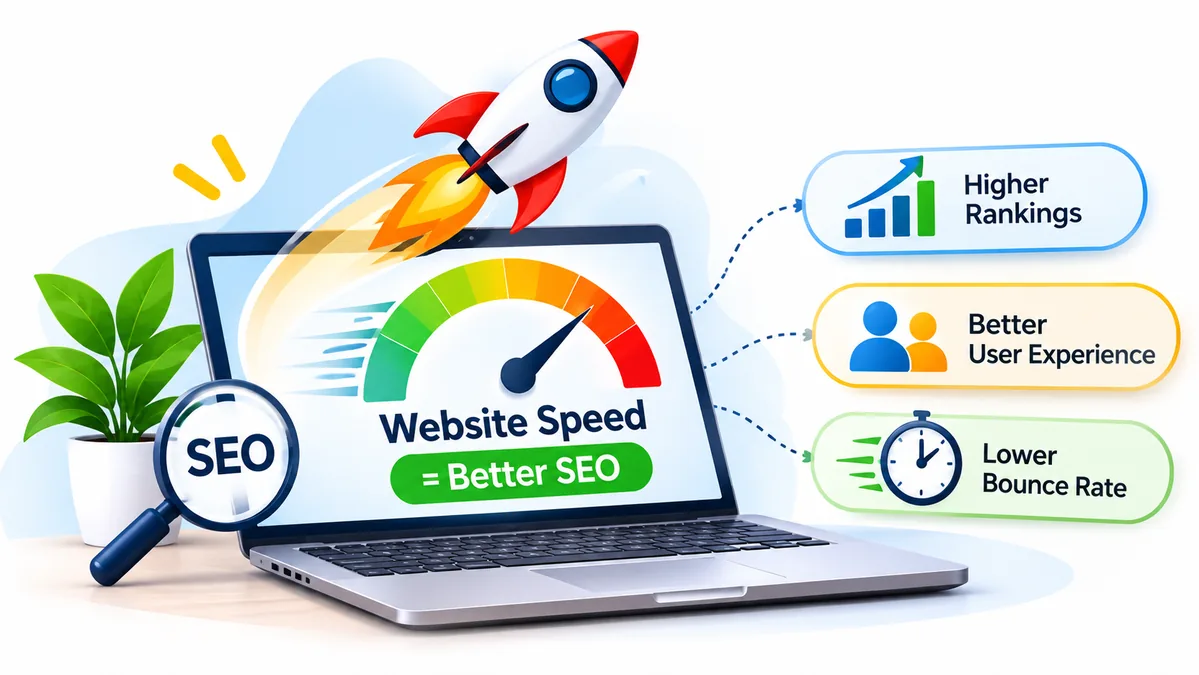
Website visitors usually expect pages to load without delays. When a website takes too long to open, people may lose patience and move to another site. For businesses, this can mean missing opportunities to connect with potential customers.
Website speed may seem like a small technical detail, but it plays an important role in how visitors use a website and how search engines evaluate its performance. Let’s understand why website speed matters and how businesses can improve it.
What Is Website Speed?
Website speed is the time a webpage takes to open and display its content when a visitor clicks on it. Images, videos, website design, hosting, and scripts can all affect loading time.
Some common reasons for slow websites include:
- Large image files
- Slow web hosting
- Too many plugins
- Unoptimized website code
- Poor mobile performance
How Does Website Speed Affect SEO?
Apart from keywords and quality content, the way a website performs also matters. Pages that load smoothly make it easier for visitors to explore the information they need.
- Core Web Vitals
Google checks website experience using three important measurements called Core Web Vitals. They help identify whether a webpage loads properly and responds smoothly.
- LCP: Checks how long the main content takes to appear.
- INP: Checks how quickly the page responds when a visitor clicks a button or interacts with it.
- CLS: Checks whether page elements move unexpectedly while loading.
Improving these measurements can help provide a better browsing experience.
- Mobile Experience
Today, many customers visit business websites through their smartphones. They may be searching for a service, checking prices, or looking for contact details. If the website is slow or difficult to navigate, they may leave without taking any action.
Make sure your website displays properly on different screen sizes and that visitors can easily access its important information.
How Slow Websites Affect Visitors
A slow website can create several problems:
- Visitors leave: When a website takes too long to load, visitors may lose interest and look for information elsewhere.
- Poor navigation: Moving between pages becomes frustrating.
- Fewer enquiries: Potential customers may leave before submitting a contact form or requesting a service.
A website should make it easy for visitors to find information and contact a business.
5 Simple Ways to Improve Website Speed
Here are some practical steps businesses can follow:
- Compress images: Reduce image sizes before uploading them to your website.
- Choose reliable hosting: Good hosting can improve server response time.
- Remove unused plugins: Keep only the plugins your website needs.
- Enable caching: Allow browsers to store website resources for faster repeat visits.
- Optimize for mobile: Check that your website works properly on smartphones and tablets.
Tools to Check Website Speed
Several online tools can help you check your website’s loading speed and find areas that need improvement.
- Google PageSpeed Insights: Checks mobile and desktop performance and suggests improvements.
- GTmetrix: Helps identify elements that slow down your website.
- Google Search Console: Provides information about Core Web Vitals and affected pages.
Regular checks can help you understand where improvements are needed
Conclusion
Website speed is an important part of creating a good browsing experience. A slow website can discourage visitors, while a well-performing website makes it easier for people to explore your services.
Simple improvements such as compressing images, choosing good hosting, and optimizing mobile performance can make a difference.
Improve Your Website with Humbrix Hub
At Humbrix Hub, we provide digital marketing, technology and development, and brand identity services to help businesses build a stronger online presence.
Visit our service page to learn more about how we can support your business goals.